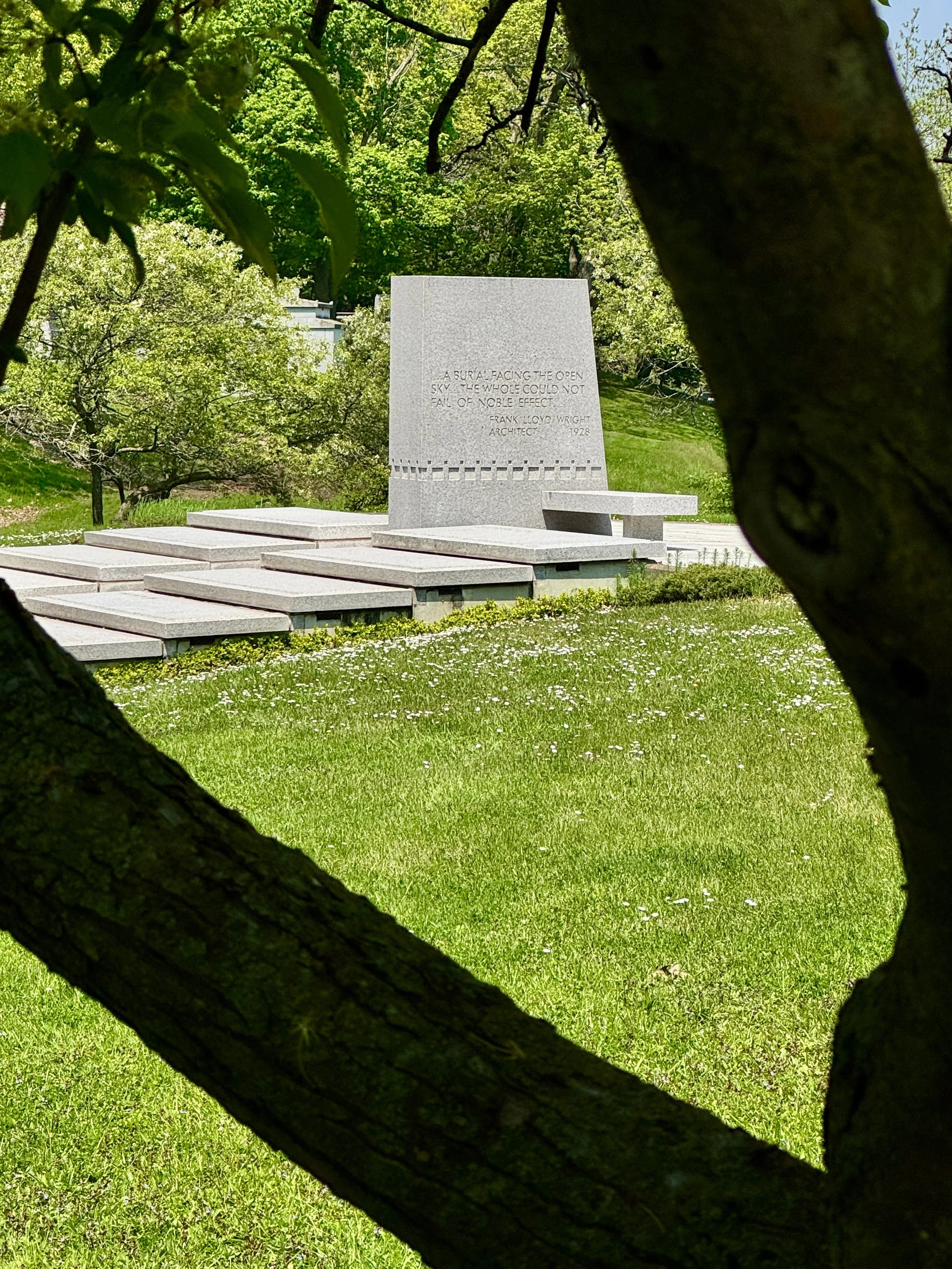
Frank Lloyd Wright's remarkable Blue-Sky Mausoleum was designed for Darwin D. Martin and his family at Forest Lawn Cemetery in Buffalo, New York sometime between 1925-1928.
The exact origins of the commission remain somewhat unclear, but the resulting design built in 2004 stands as one of Wright's most innovative interpretations of a memorial space.
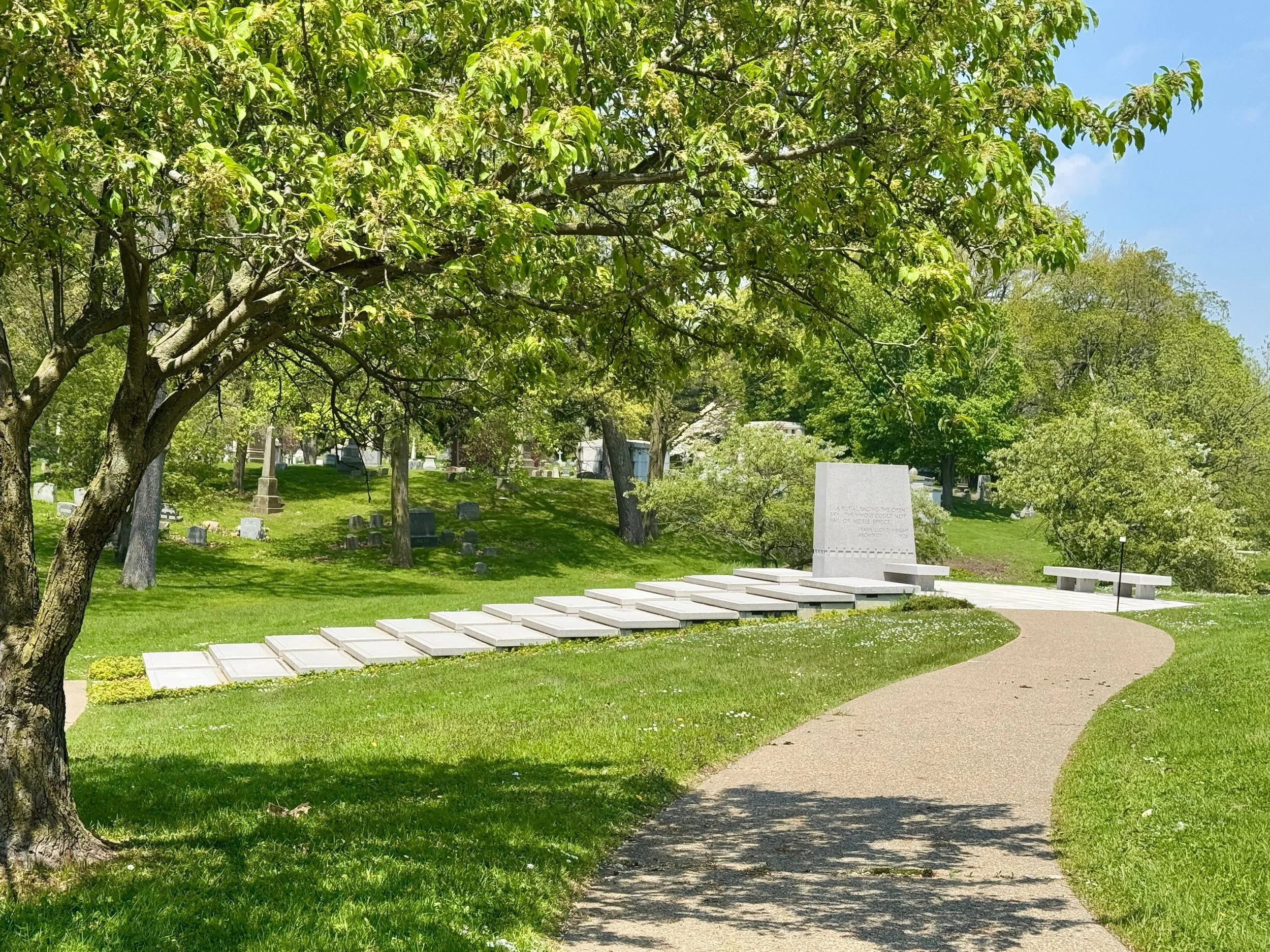
Forest Lawn President Fred Whaley described Wright's radical departure from traditional mausoleum design this way:
"To Frank Lloyd Wright, the ceiling, or the roof if you will, of this memorial was the sky—not a constructed ceiling or roof. The walls are the natural trees and ground and organic materials surrounding the site—not constructed walls."
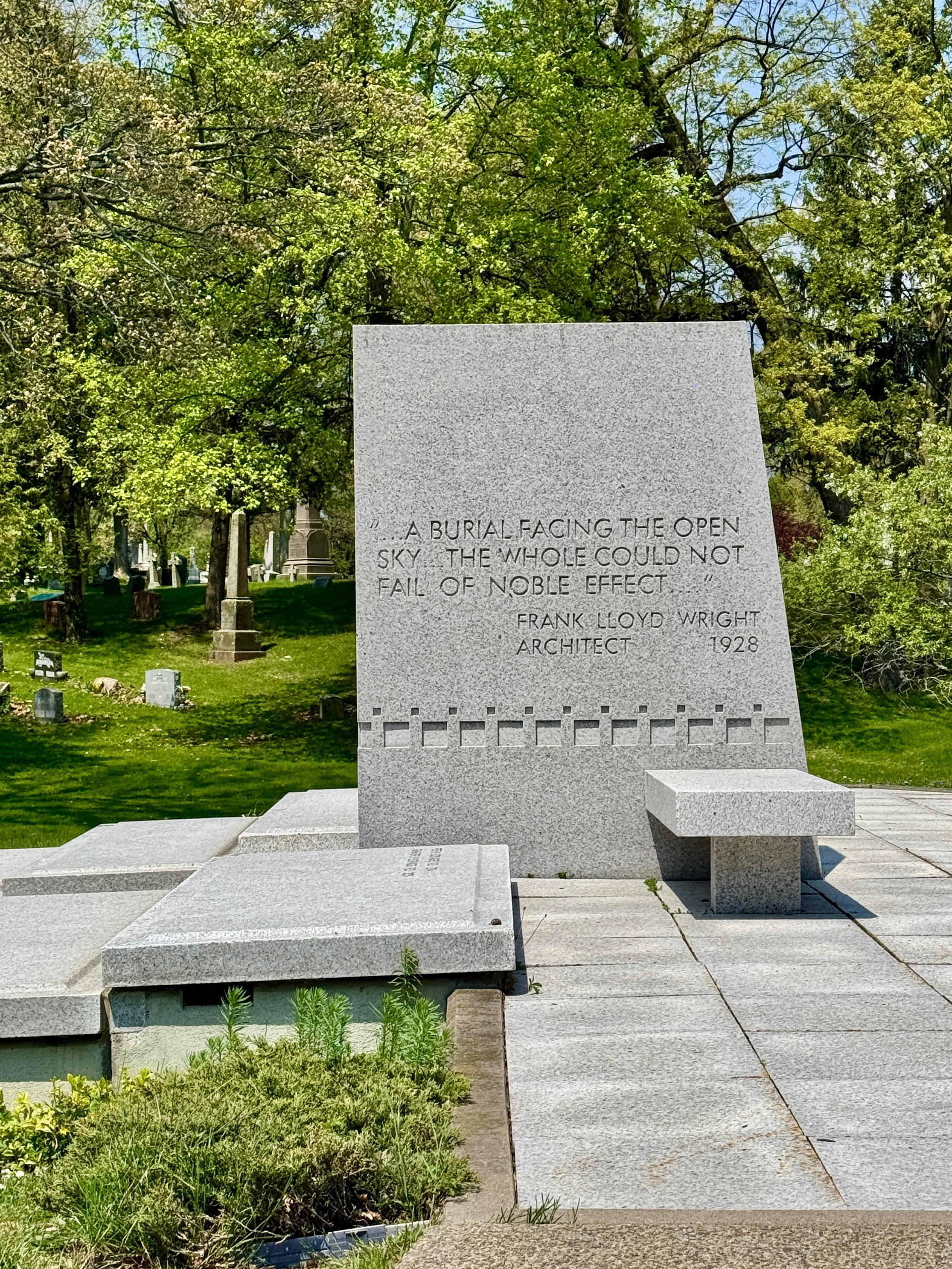
The memorial has no enclosed walls or roof, it also has no formal entrance, another significant break from convention.
Much like the nearby Darwin Martin House, Blue-Sky Mausoleum is organized around a strong central axis and employs Wright's characteristic pier-and-cantilever approach. Broad granite terraces containing twenty-four crypts—twelve on each side—rise gently toward a central monolith that serves as the focal point of the composition. Constructed entirely of Rock of Ages Bethel White Granite from Vermont, the memorial emerges from the landscape as a material expression of the earth itself.
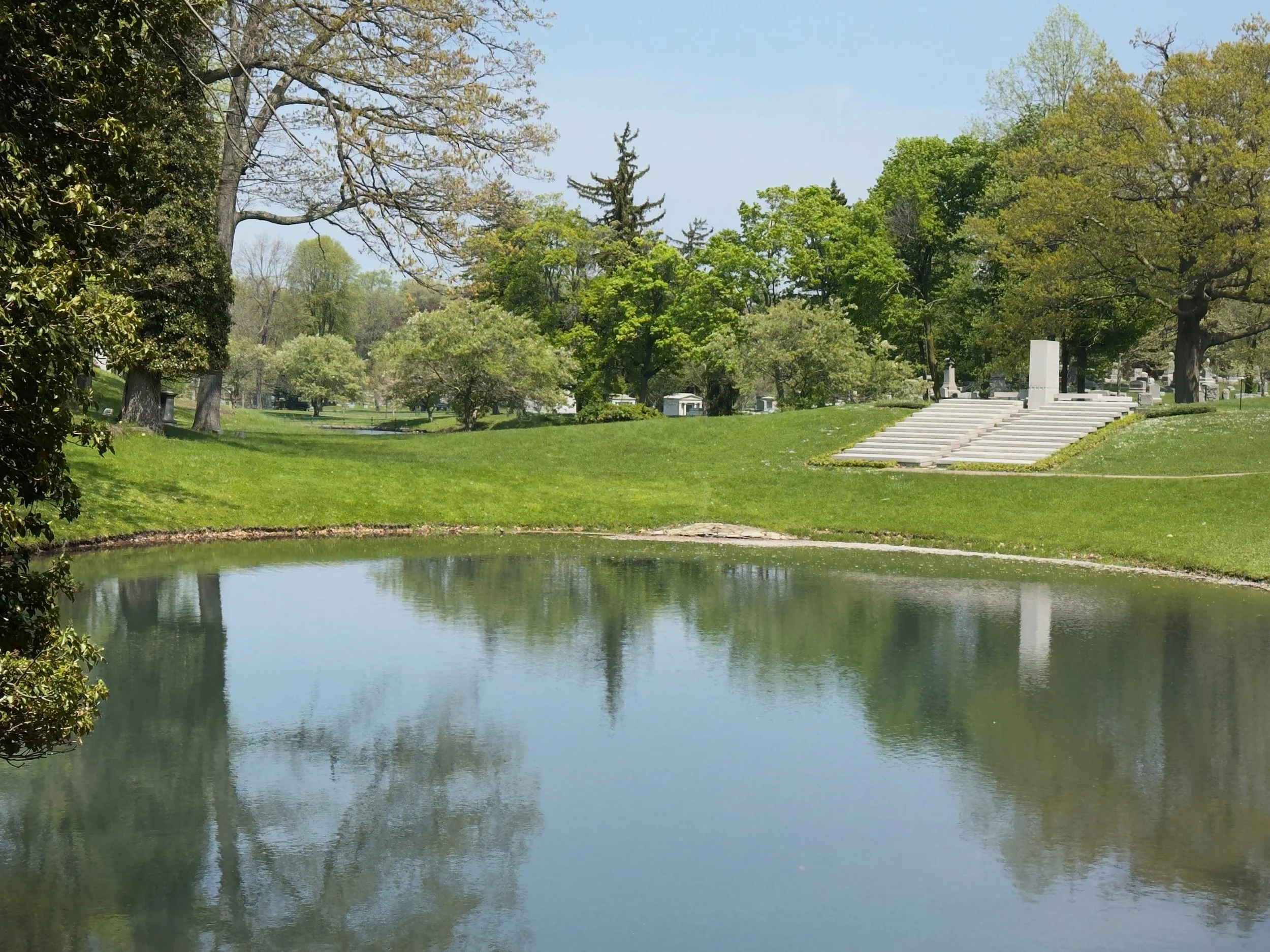
Overlooking a small pond, the mausoleum is framed by conifers that form natural "walls" around the terrace, creating a subtle contrast with the crisp geometry of the granite.
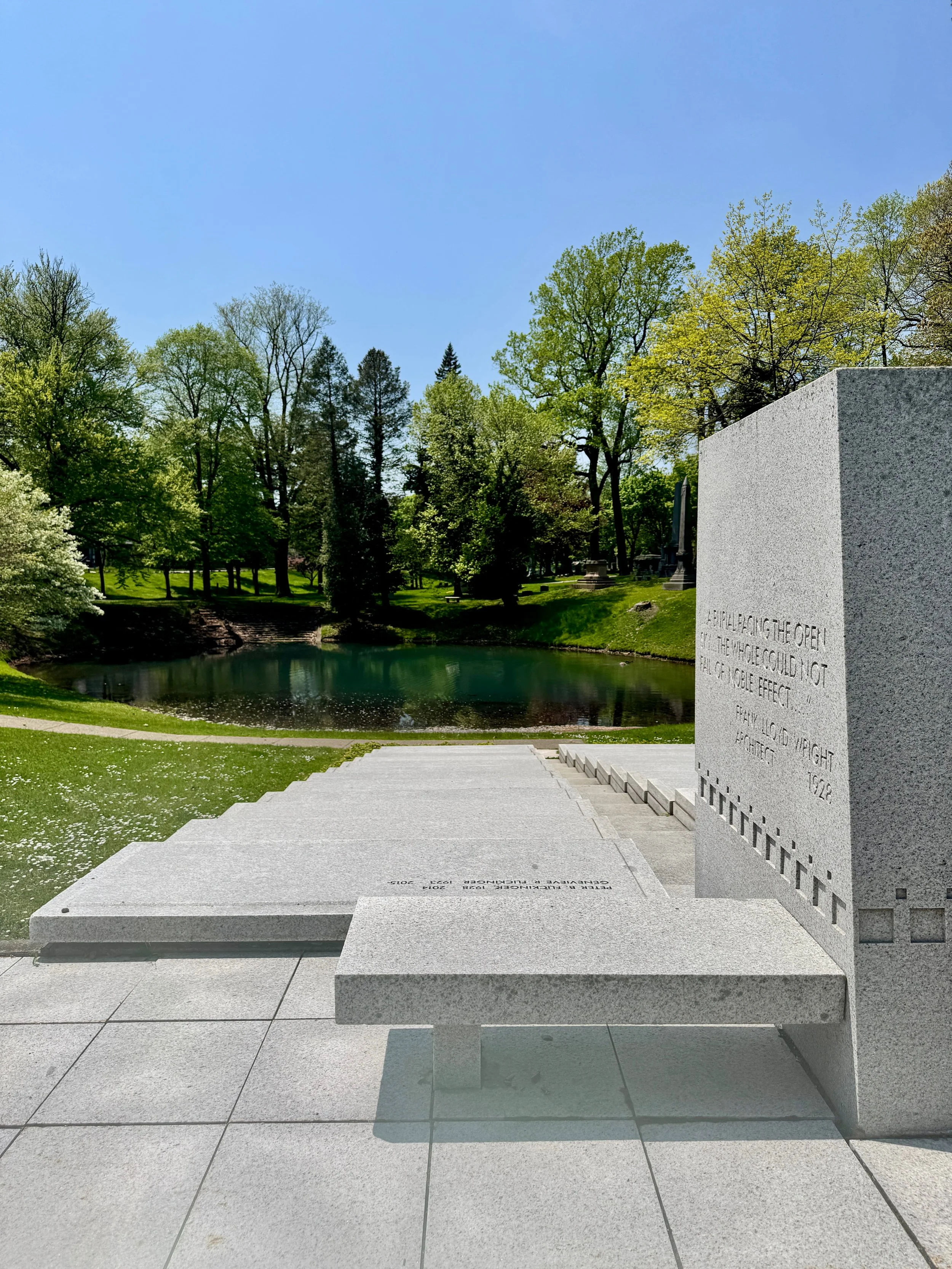
Benches encourage visitors to pause, reflect, and engage with the landscape. More park than monument, Blue-Sky Mausoleum embodies Wright's belief that architecture should work in harmony with nature, creating a place for contemplation beneath an open sky.