
Over the course of his career, Wright designed several boathouses, but only a few were ever realized.
Like much of his work, these designs weren’t just functional structures for storing boats—they were carefully composed spaces that connected architecture to the water and surrounding landscape.
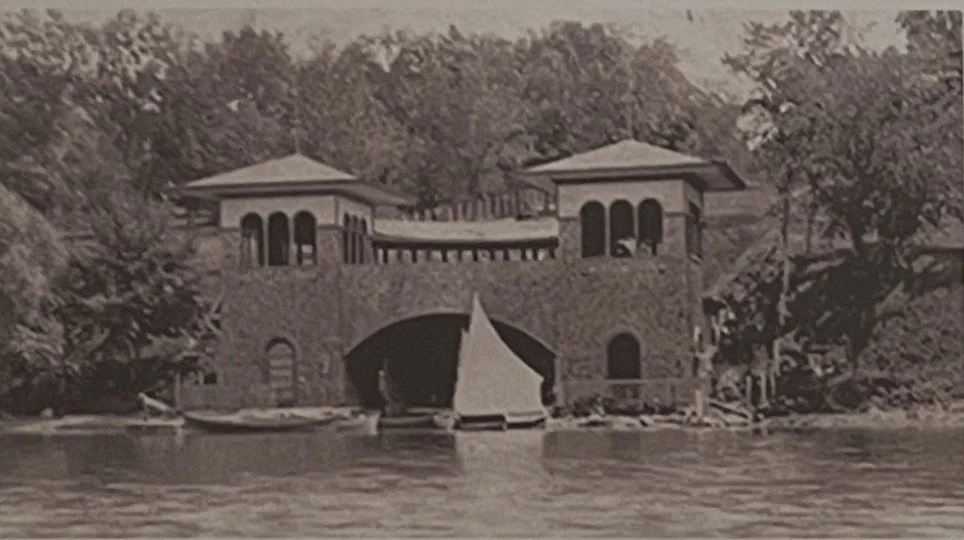
Lake Mendota Municipal Boathouse Madison, WI
One of the earliest was the Lake Mendota Municipal Boathouse in Madison, Wisconsin (1893–1926), designed after Wright won a public competition while still early in his career.
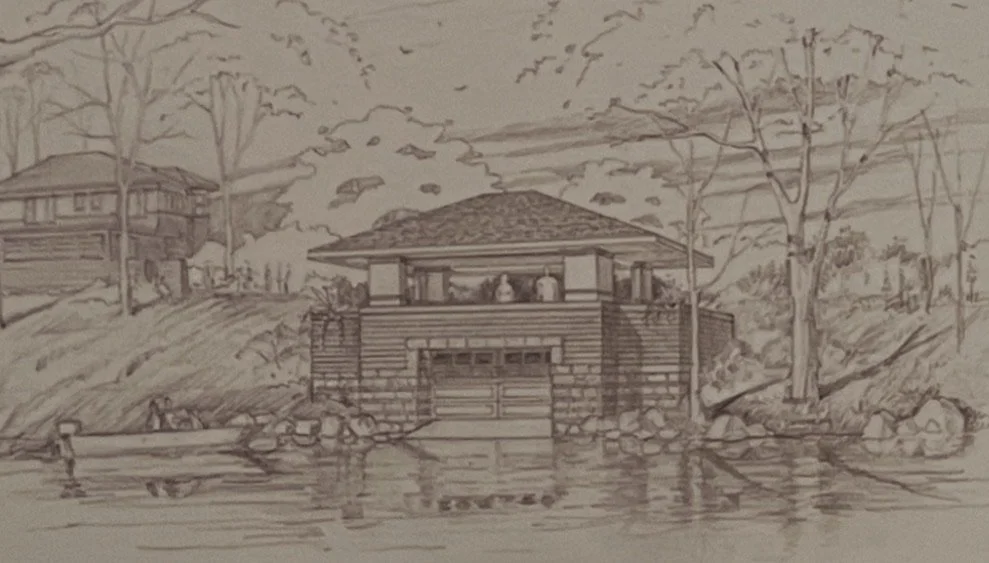
Wallis Boathouse Lake Delavan, WI
Others followed including the Wallis Boathouse on Lake Delavan and the Jones Boathouse at Penwern Estate, both in Wisconsin.
The Jones Boathouse was tragically lost to fire in 1975 before being painstakingly rebuilt in 2006 from historic photographs and drawings.
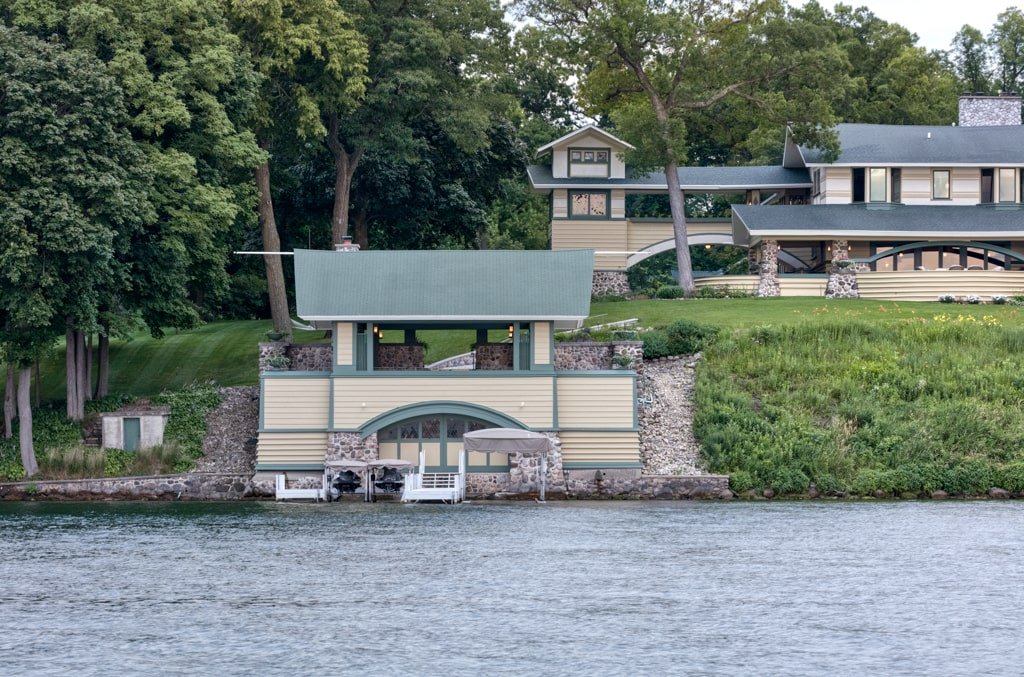
Jones Boathouse (Penwern) Lake Delavan, WI

Jones Boathouse (Penwern) Lake Delavan, WI

Jones Boathouse (Penwern) Lake Delavan, WI
Wright’s only surviving original boathouse design is the Walter River Pavilion at Cedar Rock in Independence, Iowa (1948), where cantilevered terraces, long horizontal rooflines, and river views make it feel like a natural extension of the landscape.

Walter River Pavilion (Cedar Rock) Independence, IA
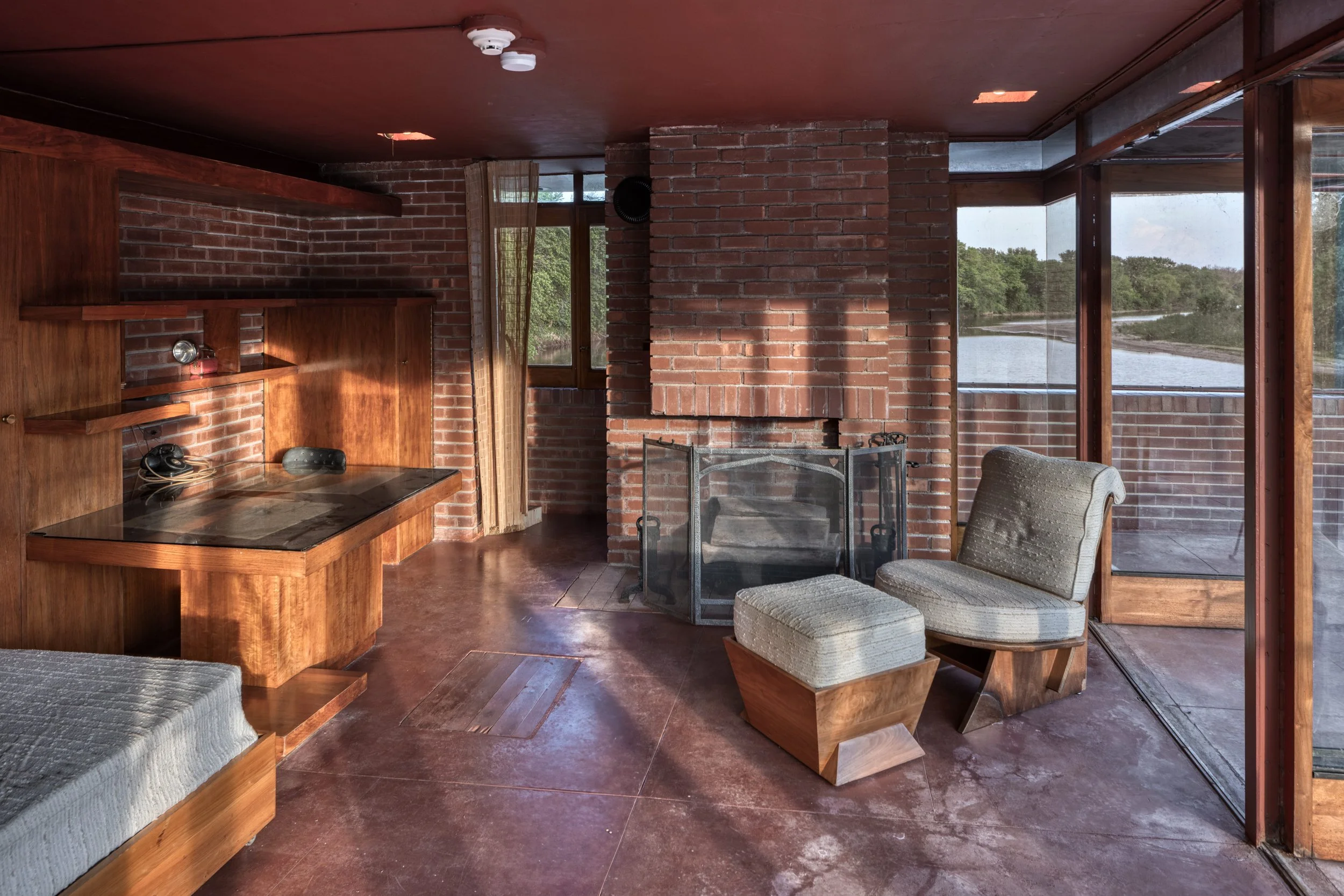
Walter River Pavilion (Cedar Rock) Independence, IA
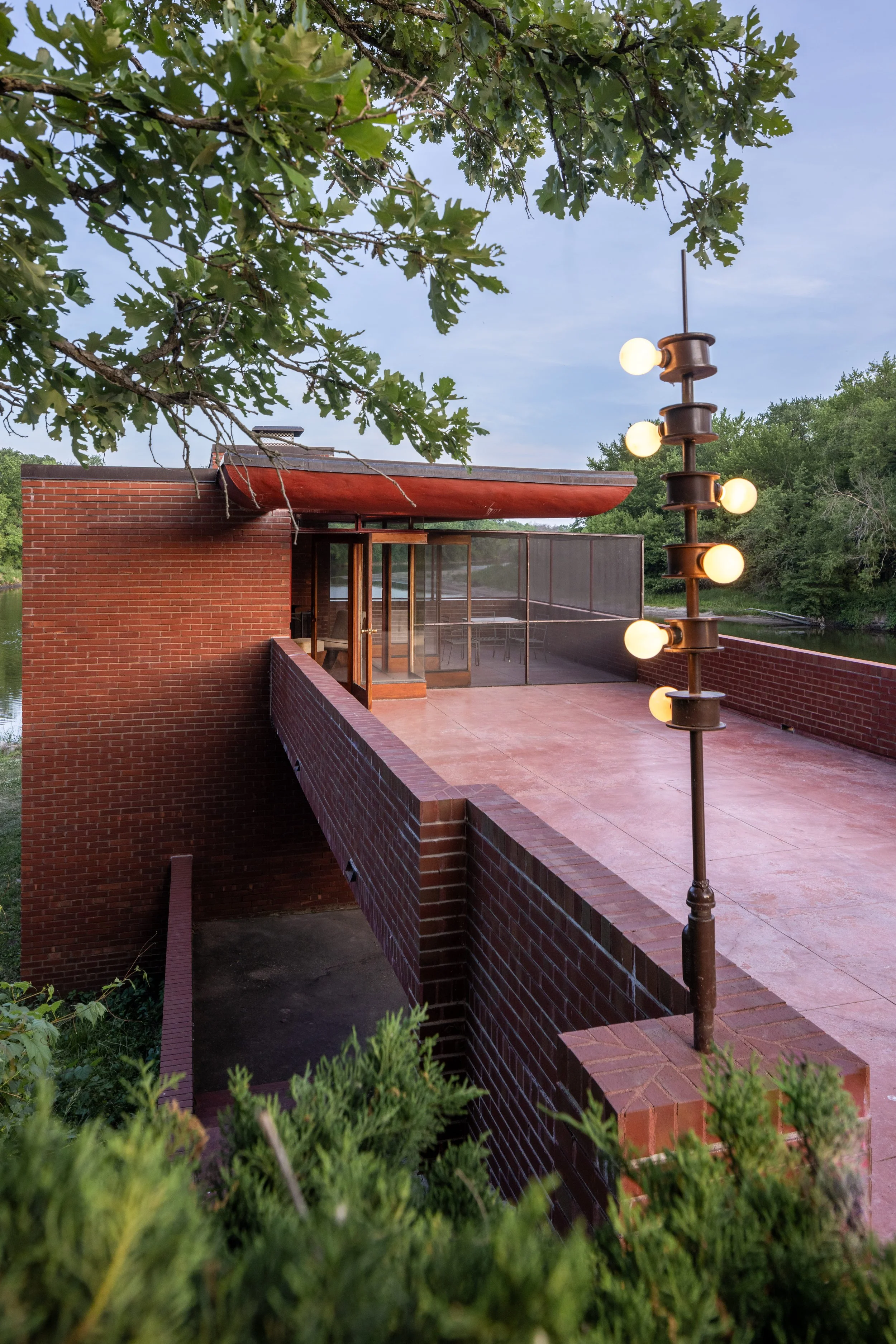
Walter River Pavilion (Cedar Rock) Independence, IA
Even after Wright’s death, his boathouse designs continued to live on.
The Fontana Boathouse in Buffalo, New York was finally completed in 2007 from Wright’s original 1905 drawings for the University of Wisconsin crew team—more than 50 years after his death.
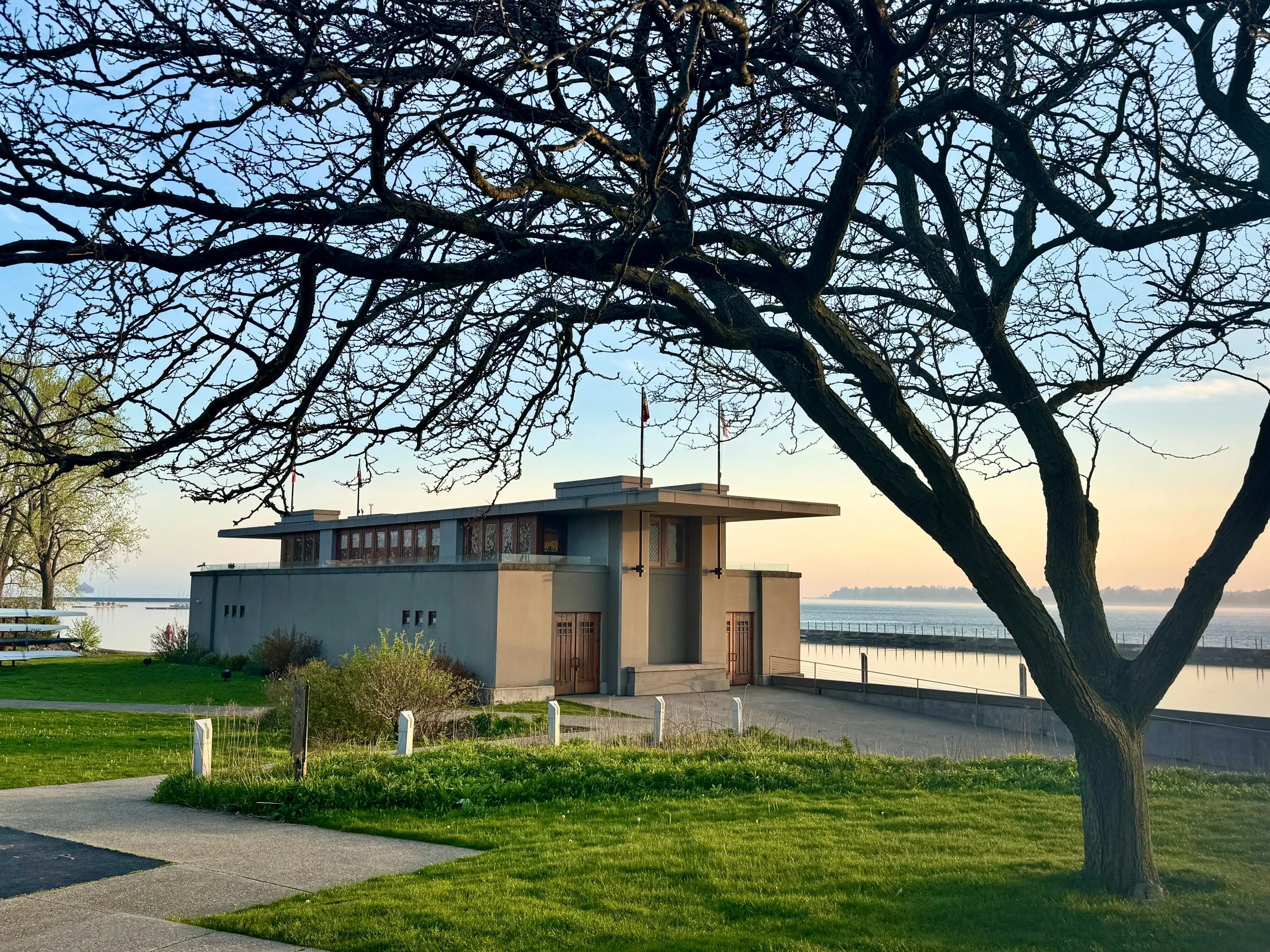
Fontana Boathouse Buffalo, NY
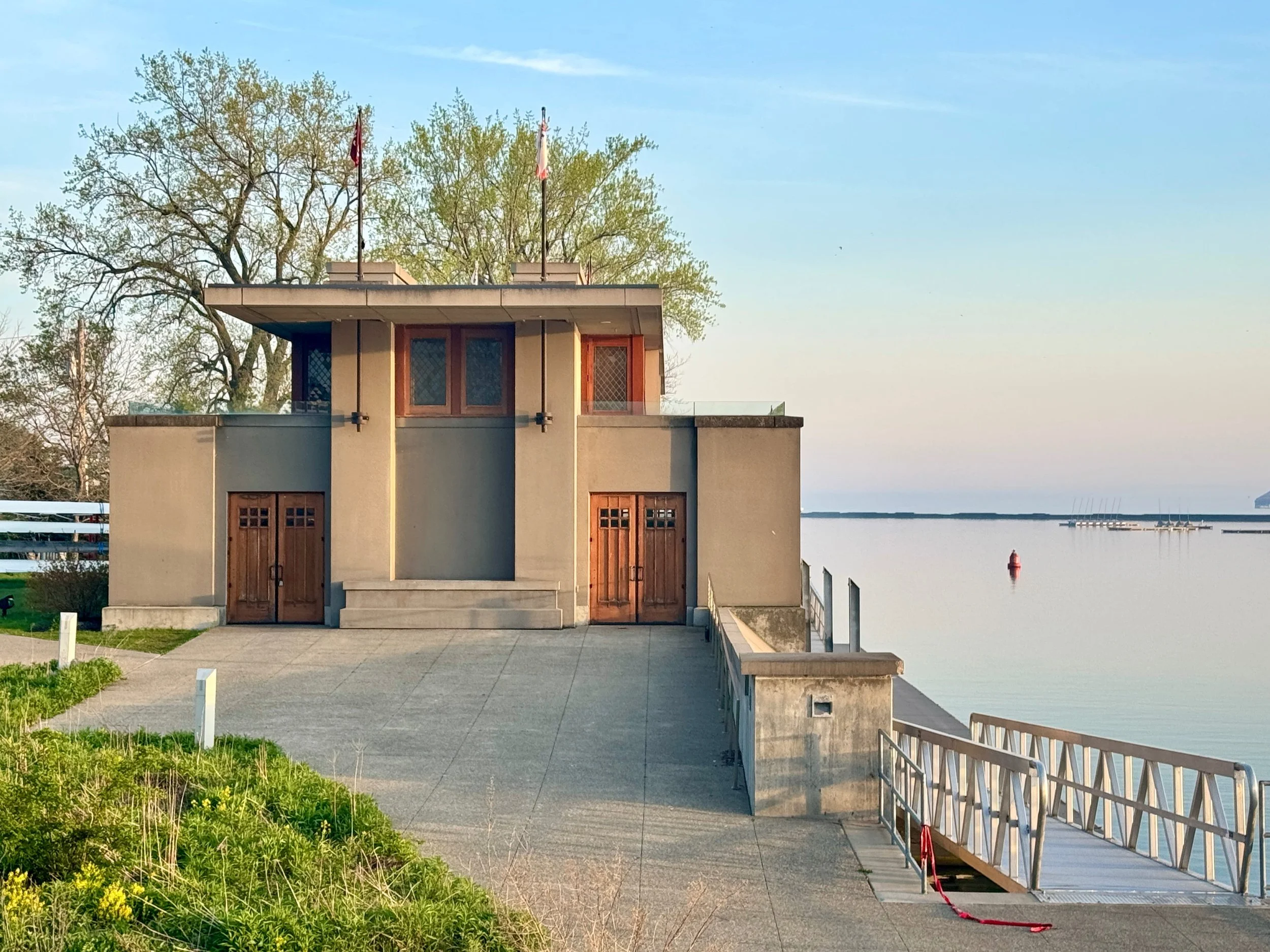
Fontana Boathouse Buffalo, NY
What I enjoy about these designs is how Wright approached even utilitarian structures with the same level of thought and detail as his homes.
The architecture wasn’t simply placed near the water—it became part of the experience of being on it.
RELATED CONTENT:
