
One of Wright’s Finest Examples of Prairie School Architecture - Darwin D. Martin House
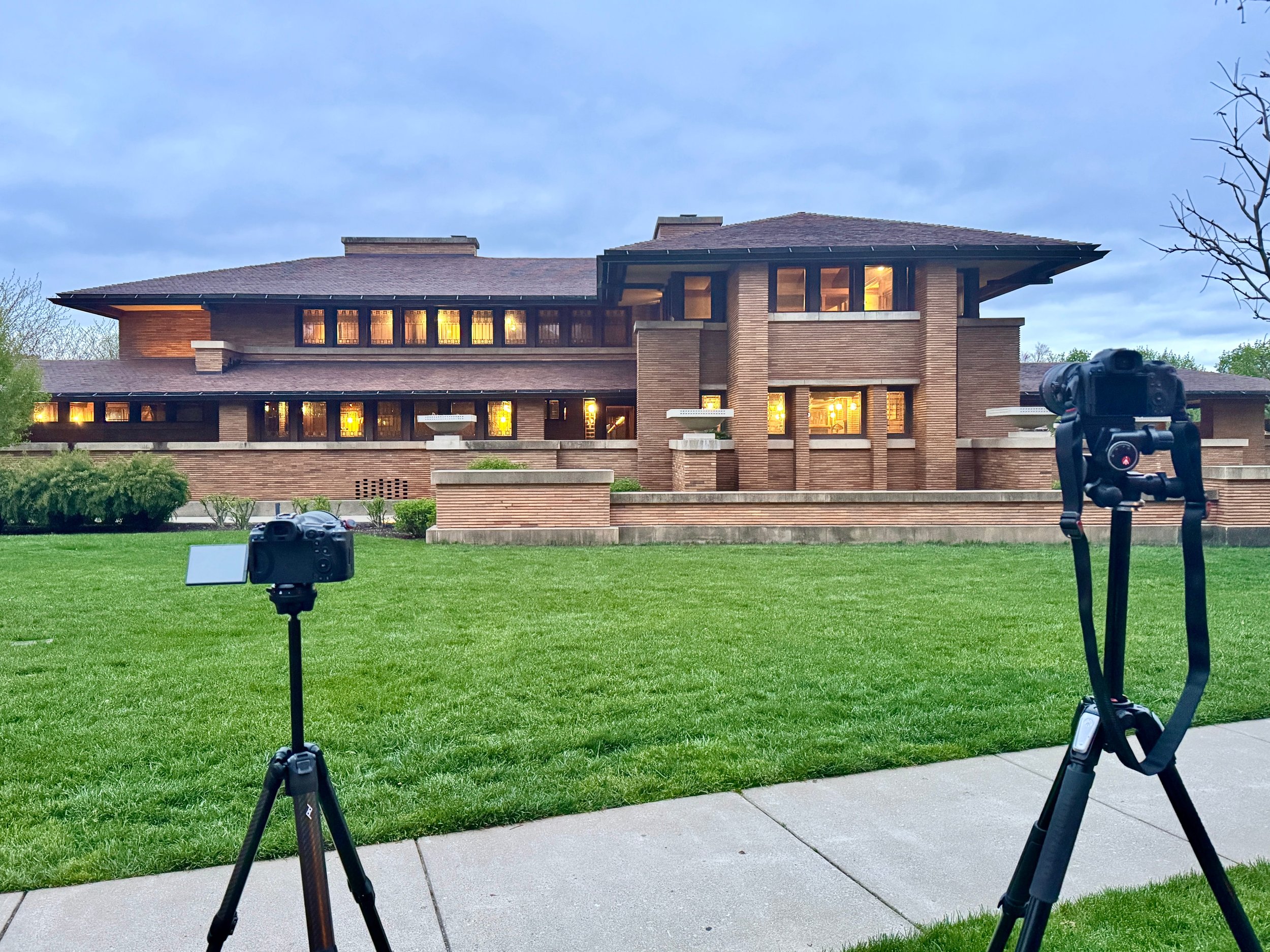
Frank Lloyd Wright’s Darwin D. Martin House in Buffalo, New York (1903-1905). 📷: iPhone15Pro
Designed between 1903-1905 for businessman Darwin Martin, the complex is widely considered one of the finest examples of Wright’s Prairie School architecture and one of the most important residential commissions of his early career.
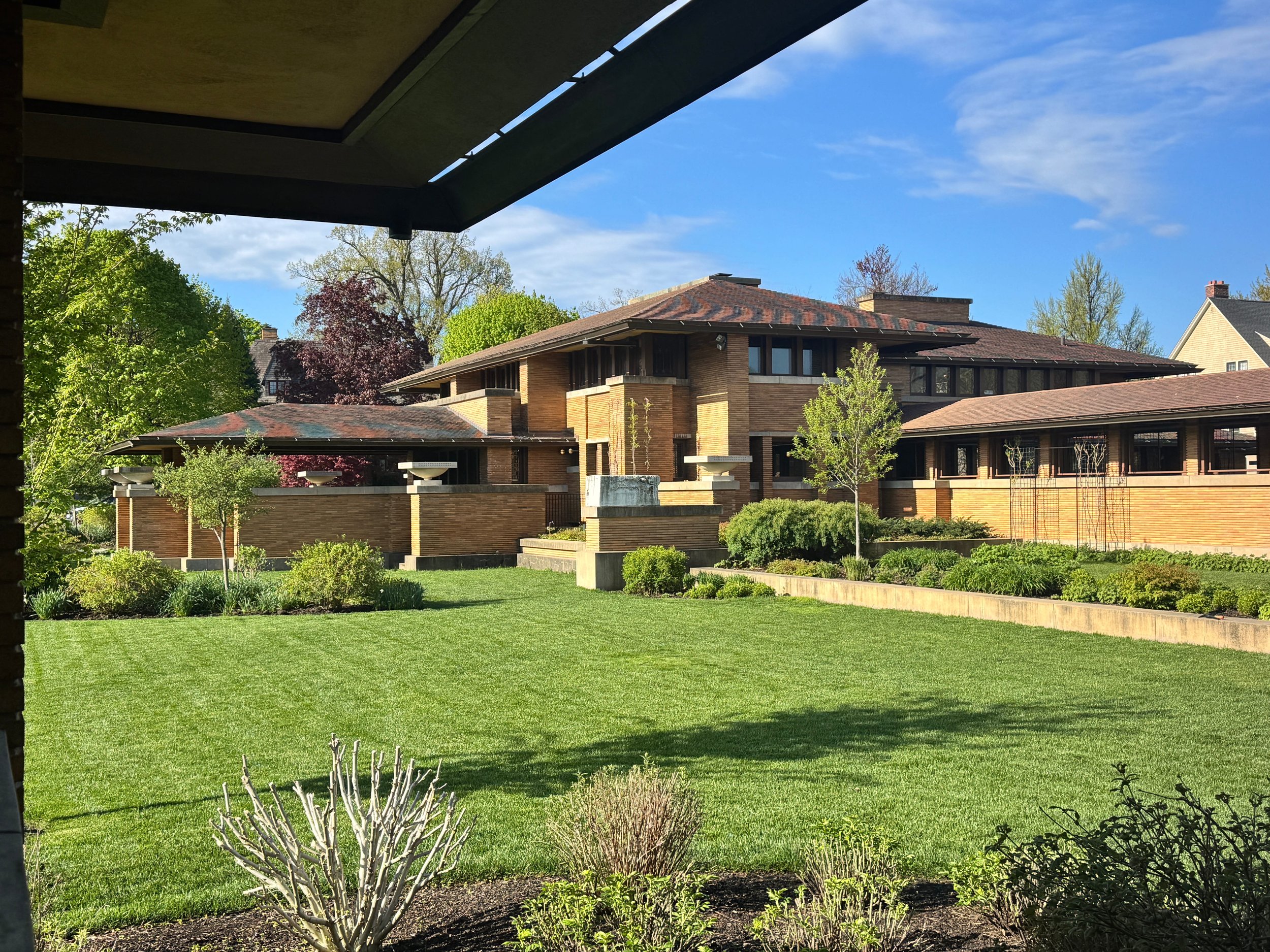
The Martin House is known for its dramatic horizontal lines, deep overhangs, open flowing interior spaces, and incredible use of art glass.
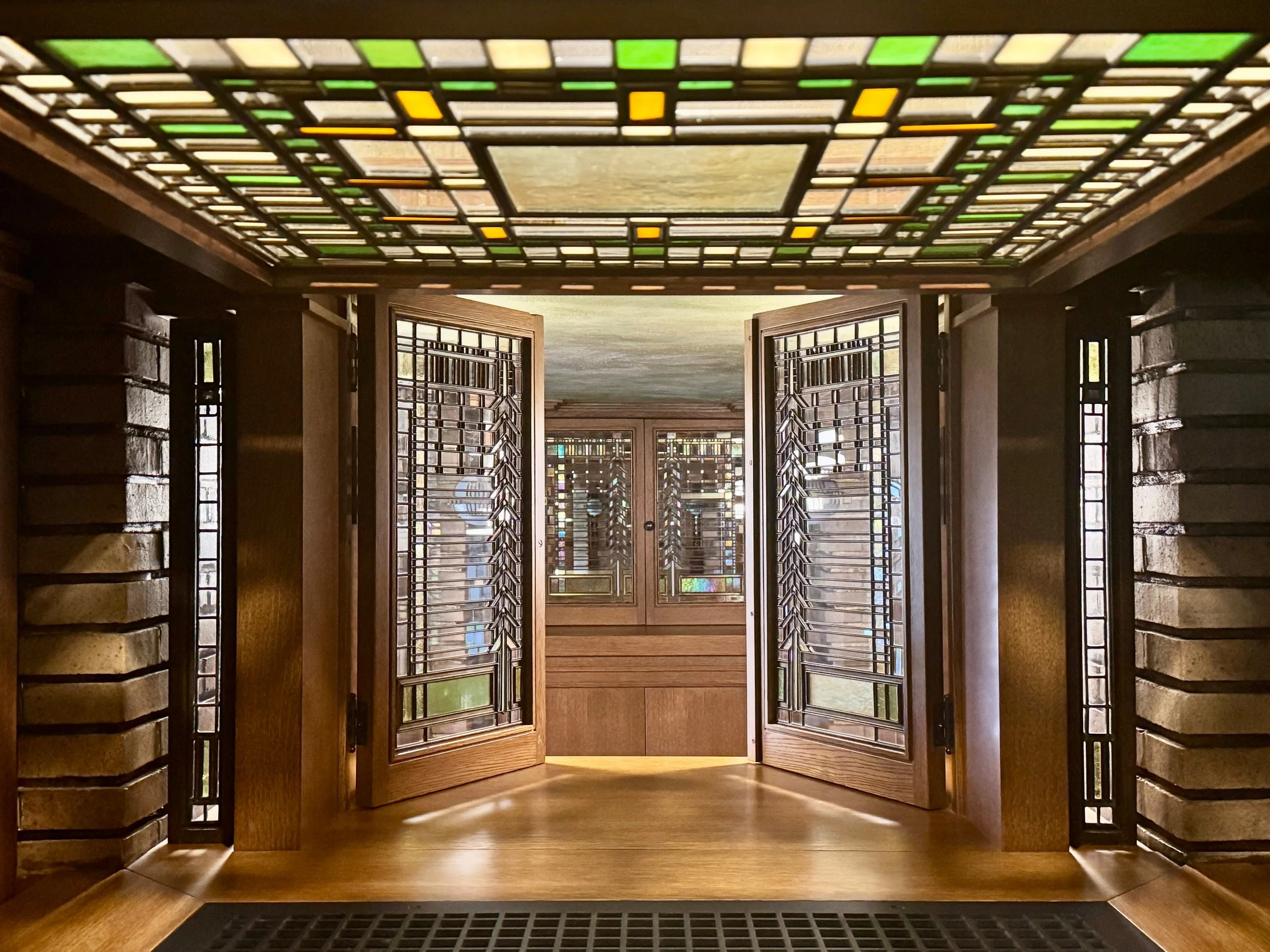
Wright designed 400ish examples of art glass in 16 primary patterns for the estate, many featuring his famous “Tree of Life” motif that helps blur the boundary between inside and outside.
Art glass featuring Wright’s famous “Tree of Life” motif. Darwin D. Martin House. 📷: iPhone15Pro
The estate itself was conceived almost like a small campus, originally including the main house, pergola, conservatory, carriage house, and gardener’s cottage all connected into one unified composition.
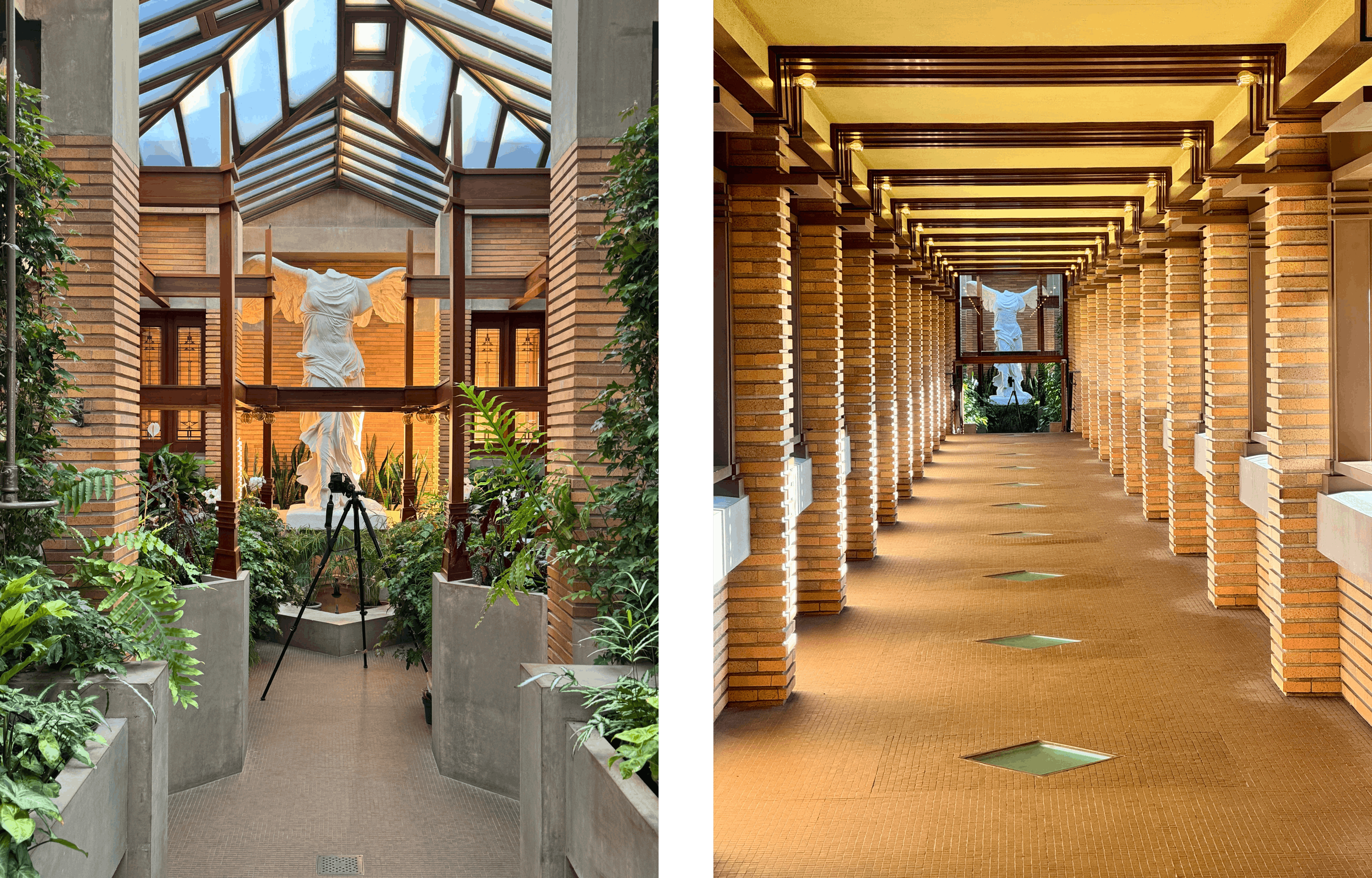
The long pergola leading to the glass conservatory remains one of the most unique and recognizable spatial sequences in Wright’s residential work.
Left: White statue of Nike (meaning Victory) in the conservatory. Right: Long pergola leading to the glass conservatory. 📷: iPhone15Pro
Frank Lloyd Wright’s Darwin D. Martin House in Buffalo, New York (1903-1905), photographed from the Barton House. 📷: iPhone15Pro
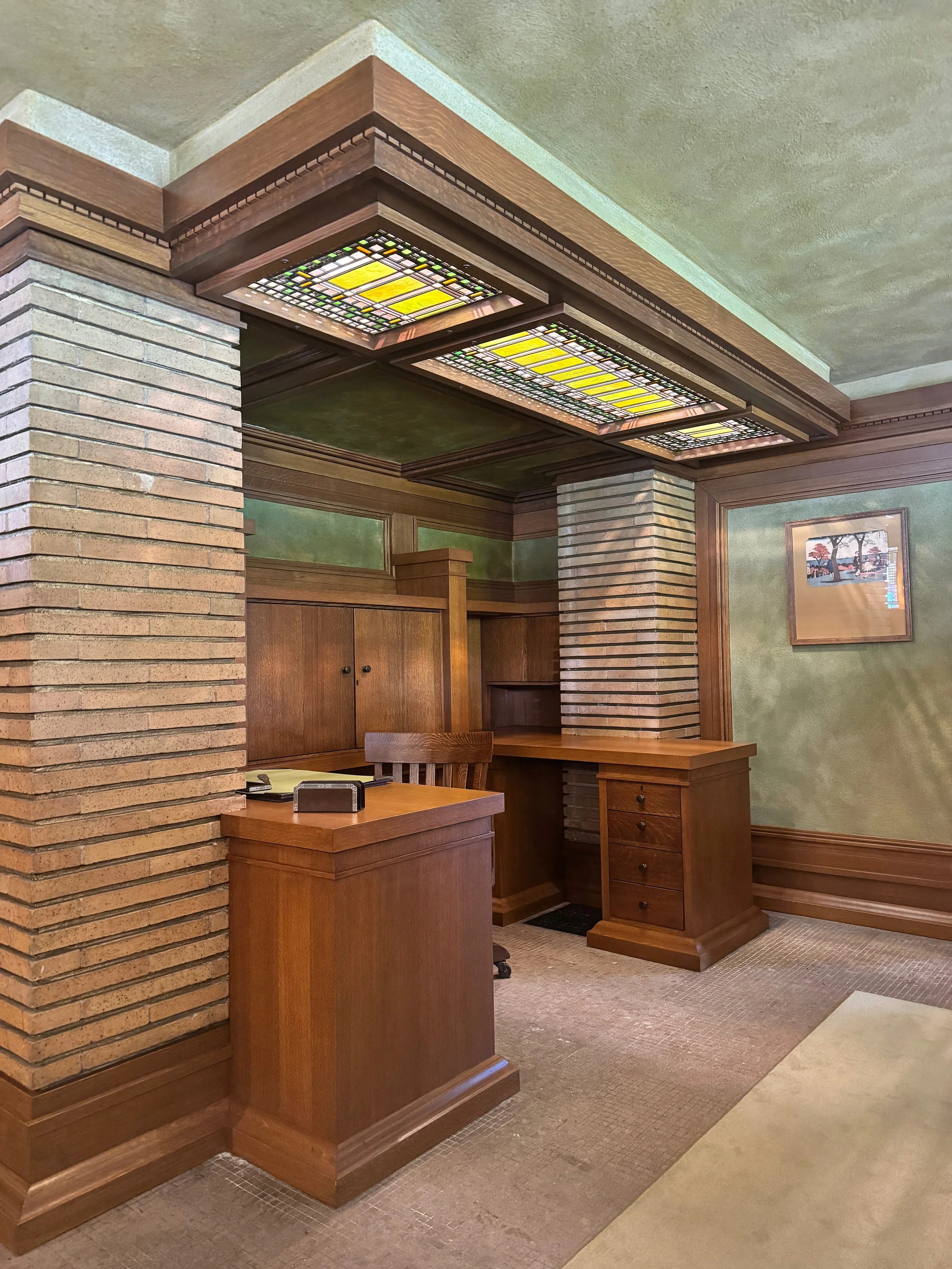
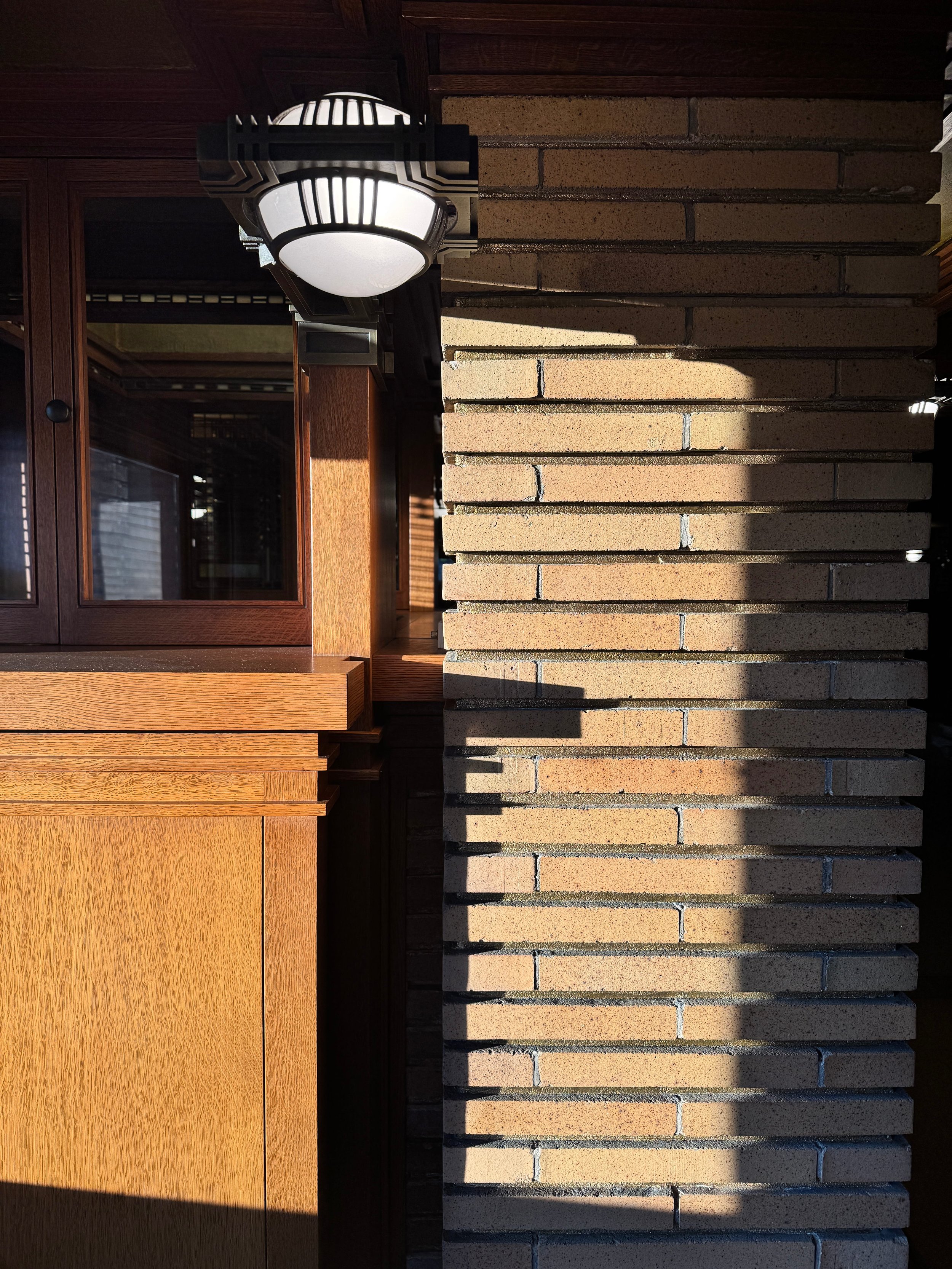
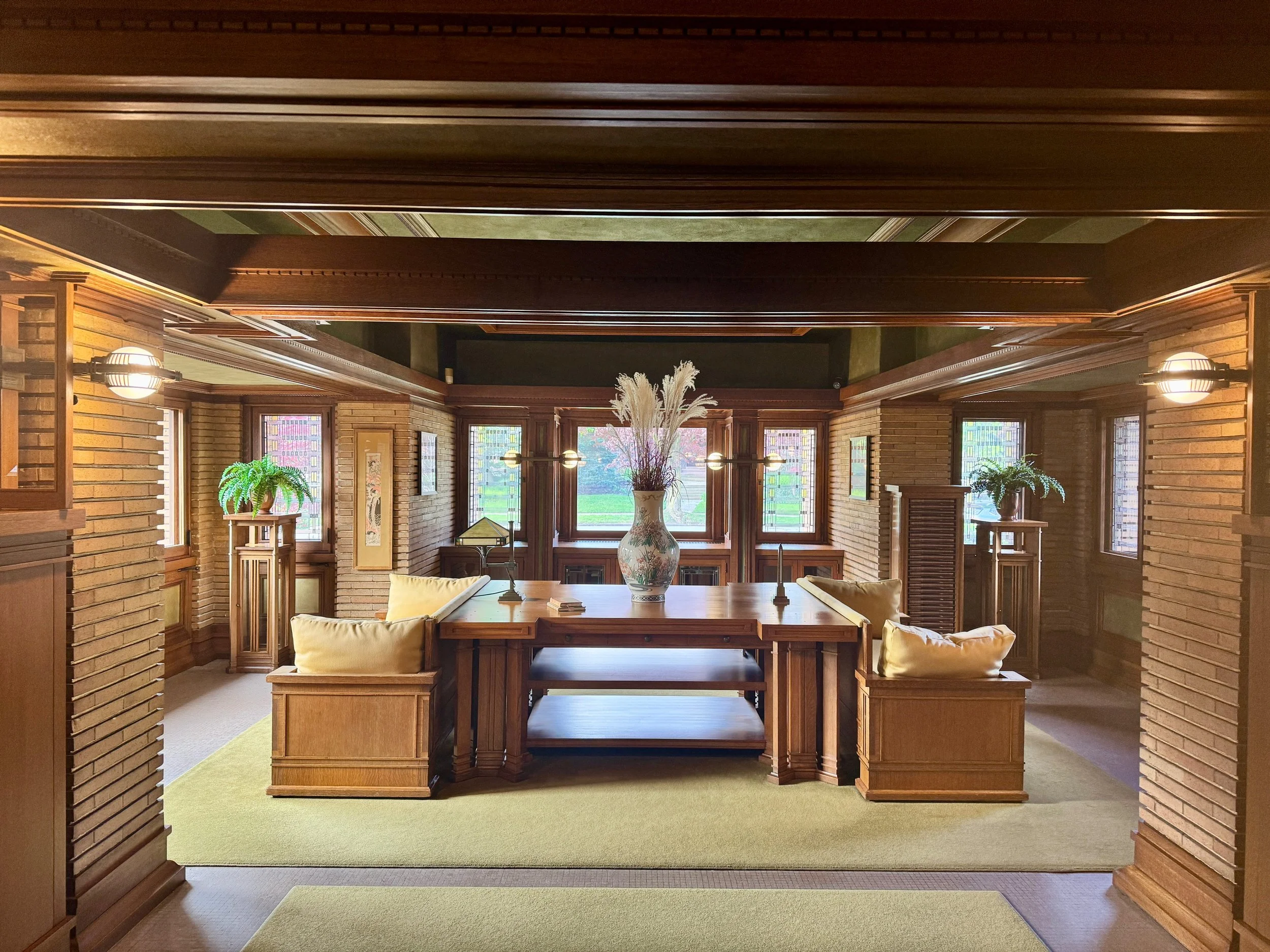
Frank Lloyd Wright’s Darwin D. Martin House in Buffalo, New York (1903-1905) Interior. 📷: iPhone15Pro
MARTIN HOUSE FIELD NOTES
DESIGN
That pergola design is really cool and it’s such a cool sight line when you first enter the front door. You can literally see from one end of the estate to the other. The pergola feels more like an open air gallery with wood frames lining both sides, literally framing the landscape.
The white statue of Nike (meaning Victory) in the conservatory is awesome and almost monumental in ratio to the space. Wright put up some beautiful wood, I guess I would call it framing, in the conservatory that definitely gives off an Oak Park Home & Studio vibe.
Parts of the exterior give off a Robie vibe, you can see where parts of the Martin design were used at Robie.
PHOTOGRAPHY
Sometimes I roll up to a Wright site at exactly the right time—the weather is perfect, the light is doing what I hoped for, and I can move quickly through the design making the compositions I had envisioned.
That was not the case at the Martin House, this one made me earn it.
Luckily, I had scheduled two days for the project for exactly that reason. No matter what the weather app says, I usually schedule and arrive assuming it’s going to be sunny, which is my preferred light to work with at any Frank Lloyd Wright sites. (See previous post from Hanna House)
So when I arrived for sunrise on the first morning, it was completely overcast. No direct light in the house and it’s already fairly dark—like many of Wright’s early Prairie houses inside this one. At that point, you just have to move through the space and make the photographs anyway, not knowing if the light will improve or if this might be your only opportunity before the weather completely changes. In reality, it could start raining at any moment. So that’s what I did—working through the house and hoping either later that day or the following morning I’d get the light I was looking for.
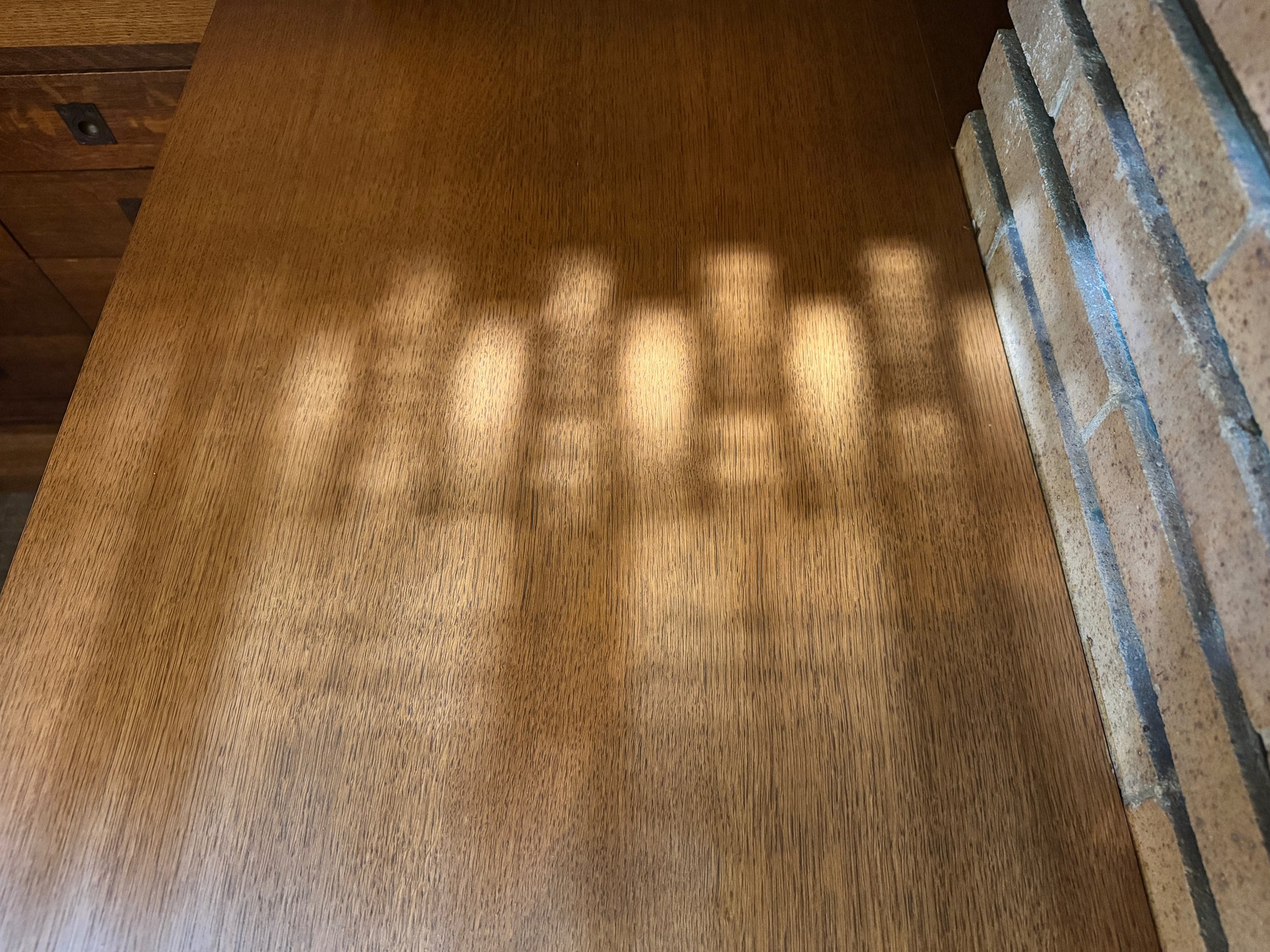
That first morning, the sun only broke through for a few minutes at a time. Every time it did, I worked as quickly as possible to capture that light. The images were usable, but I knew they weren’t quite the quality of light I wanted for the #500fllwproject.
Luckily, the next morning brought clear blue skies, and I essentially repeated many of the same compositions from the day before—only now with the light I had hoped for. I always try to be efficient with both my time and the Wright sites time, but this was one of those situations where I was completely at the mercy of the weather and the light. Thankfully, I already knew the compositions from the previous day, so when the good conditions finally came together, I was ready.
Like I’d mentioned, the main house is pretty dark, much like most of Wright’s Prairie-style designs. Maybe this was Wright still trying to figure out the ratio of window size to square footage? I feel like the windows were placed in the correct locations, but perhaps the size of them—and the deep overhangs—had not been fully worked out yet. This is also coming from someone who likes to photograph light more than architecture itself, so I’m especially aware of how light affects interior spaces.
The conservatory was the complete opposite. Great light in there all day, but the second morning I was lucky enough to discover something even better than great light… look at how the light glows from behind and underneath, illuminating her wings from below. Discovering this light was definitely a highlight for me.
I know the Martin House is a public site, so what do all of you think of the estate?